Mosquito coils. I don’t mean the plug-in electric repellent, I mean the kind your grandmother lit at her house, the spiral one. Do you know what its stand looks like? I didn’t want to find out either.
I recently took up running for my health, and within a couple of weeks I was itching to go out and run at around seven every evening. Mind you, I only run two or three kilometers at most, and I walk when it gets hard. While I’m actually running, I wonder why I’m doing this to myself. But the next day, without fail, I want to go out and run again.
On Thursday I bought running shoes. About three to four years ago, on a trip to Osaka, I stepped in human excrement on my way back to the hotel after a night of drinking. I wanted to believe it was dog poop, but it was unmistakably human; the smell was far too familiar. I went on the trip to buy a briefcase, the one I still carry today—the weak yen and the sales were such that the retail price in Korea was more expensive than the Japanese price plus airfare—but suddenly, I had to buy a pair of sneakers as well.
I bought running shoes on Thursday because running in those four-year-old, five-thousand-yen sneakers felt like it was wrecking my ankles and thighs. I went to a nearby shop, had my feet analyzed, and picked the most comfortable pair from among the ones the staff recommended. I went home thrilled, wondering how running would feel different that evening.
The next day, Friday, was a class day. I had to pick one week’s reading from the semester and write a response paper on it, and I wanted to do this particular week’s, since the paper dealt with the most traditional problem in philosophy of the topics covered in the seminar. I planned to wrap it up by ten and head out in my new shoes, but as I wrote, my ideas started to seem terrible, so I revised and revised, and then ended up rereading the paper. Before I knew it, it was four in the morning.
Exhausted, I decided to sleep for just two hours. Class was at four in the afternoon, so I figured I’d get up around six, finish the commentary by morning, eat lunch, answer my backlog of emails, and then head to school.
And so, half-asleep, I walked into the dark bedroom… and stepped on it. The mosquito coil stand. When I lifted my foot in reflex against the sharp pain, I could feel the thing lodged in my heel coming up with it.
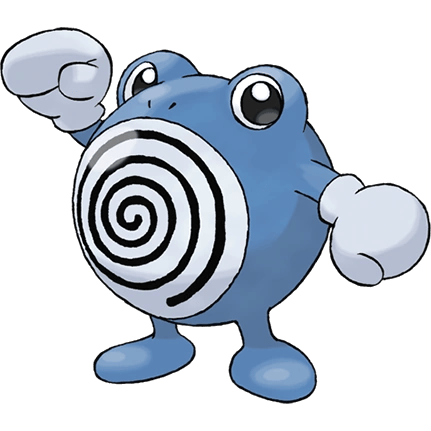
This is what a mosquito coil stand looks like: ㅗ. The coil, shaped like Poliwhirl (see below), has a groove at its center, and you fit the stand’s protruding part into the groove. It was a disaster born of trying to save money by buying grandma’s mosquito coils instead of the electric kind.
Blood poured out. When I finally got it to stop, I got scared of tetanus. In my panic, Claude calmed me down. Following Claude’s instructions, I went around four convenience stores in the small hours looking for the red disinfectant my grandmother called yodo-ttaengki (iodine tincture). Every one of them had only alcohol swabs and hydrogen peroxide. In the end I gave up, went home and fell asleep. Whatever, I’ll just die. (I slept straight through until nine thirty and barely submitted the paper two hours before class.)
My foot hurt all day Friday. More than anything, I was angry about not being able to run. Since I couldn’t run anyway, I decided to have a drink, something I’ve been mostly avoiding lately, and headed to the local yakitori place. I kept checking the reservation app Catchtable on the way to make sure there was a seat. Until five minutes before I arrived, there definitely was. But when I got there, they told me they were full. I plunged into gloom and hated the world.
So in the end, I decided to run. At eleven at night I put on my new running shoes and left the house. I’d planned to just walk if it hurt, but thanks to the thick cushioning, jogging lightly didn’t hurt. So I ran. Because it was late and I hadn’t slept well, it was harder than usual. I suddenly remembered hearing that pushing yourself too hard can bring on cardiac arrest, so after about 1.5 km I just walked.
My running-and-walking route is about six kilometers round trip. Usually I run about half of it and walk the rest. Last night, though, I basically walked four and a half kilometers. As I walked, I thought about this thing I do, running.
The time of my life when I was probably in the best shape was my days at the military specialty school, and I ran for fun back then. That was 2013, which means I’ve come back to running as a hobby after a full thirteen years. We had free fitness time then. Some trainees played soccer, some lifted weights. I ran with a few buddies, singing the Korean version of When My Granny was Ninety-one. I don’t remember how many kilometers I ran or how many laps I did. I didn’t think about those at all. I just ran until it got hard, and when it got hard, I just dropped out of formation.
Now I run along Yangjaecheon, the stream in my neighbourhood in Seoul. There’s a bridge about every five hundred meters, and I use them as milestones to keep track of how far I’ve gone. Two bridges passed, so about a kilometer; let me just run to the next one. Like that.
This is a remnant of my days in law school. When I was studying for the bar, the instructors always told us to cut our goals into small pieces. Don’t think, “today I’ll finish contracts”; think, “let’s just finish this chapter, leases.” Then, when you’ve finished leases, set another bite-sized goal and go only that far. Rinse and repeat until midnight. This is basically the Pomodoro method. As I ran, the chapters of the textbook became the bridges of Yangjaecheon.
But something odd happened. The moment I became aware of a bridge, the moment I became aware of the distance I’d run, it suddenly got hard. My ankle, which hadn’t hurt, started to hurt; my breath, which had been fine, grew short. Usually, I can run two kilometers without trouble. But the instant I thought, “there’s the second bridge,” before I’d even run a full kilometer, the instant I became aware of some “goal” I had to reach, I suddenly got winded and tired and wanted to quit right there and shuffle along. Conversely, when I ran reflexively without thinking about the brdiges, absorbed in an audiobook or something, I ran longer without tiring.
The philosopher Kieran Setiya, borrowing a distinction from Aristotle, separates telic activities from atelic ones. A telic activity is one in which the activity and its completion are conceptually distinct. An atelic activity is one in which they are not. I often walk along Yangjaecheon, but my reasons for walking vary. Sometimes I walk to get to a bar I like; sometimes I walk because I want to take a stroll. The former is telic: walking to a destination is completed only at the moment I arrive at the bar. The latter is atelic: the stroll isn’t completed at the moment I get home. I’m already strolling with every step I take. Aristotle’s example is more intuitive: seeing. When we look at a work of art, the act of seeing isn’t completed after we’ve gazed for ten, twenty, or thirty minutes. From the moment my eyes turn to the work until the moment I look away, I am seeing at every moment. The activity and its completion are not distinct.
Setiya says that filling our time with telic activities is a normative defect in our lives. Going to that university, earning that degree, rising to that rank. A life made up of a succession of telic activities is one that destroys, one by one, the very activities that give it meaning. In Setiya’s words, it’s like “meeting a friend in order to say goodbye.” Such a life soon falls into crisis, what Setiya calls the midlife crisis. This thing after that thing, this project after that project, but to what end? Perhaps this is why I, counting bridges as I run, tire so quickly. This bridge, then that bridge, but to what end? It’s not as if I’m gonna run all the way to the east coast.
But there’s another problem. C. Thi Nguyen talks about the idea of value capture, a phenomenon where complex, subtle, delicate, and multifaceted human values are replaced by “objective,” “quantitative,” “fair,” and “measurable” metrics. Yonsei and Korea Universities differ in academic culture, in strengths, in faculty, in ethos, and in core values. But the moment an objective, quantitative, fair, measurable and comparable metric like admission cutoff scores steps in, the “correct answer” given to a student agonizing between the two schools goes flat: “they’re the same—just choose the one closer to home.”
The moment we treat running in terms of distance, pace, records and cadence, the complex, subtle, delicate and multifaceted human values of running are replaced by those convenient metrics. We no longer attend to the cold air entering our lungs. We don’t notice which plants and trees grow around us. We don’t listen to the music playing as we run, or to the sentences in the audiobook that might change our lives. We just think: the next bridge is the third one, so that makes 1.5 km; three more bridges and today’s quota is filled. Running becomes what Setiya calls a “normative defect,” that is, a telic activity.
Someday I want to run 5 km. I’m not sure about anything beyond that, and for now even 5 km is quite an ambitious goal. But if I run in order to hit 5 km, I’ll want to run 6, 8, 10 km next. And then, once I’ve run 10 km, what then? To what end?
The solution is to reverse the order of reasons. Instead of running because I want to hit 5 km, I run 5 km because I want to take more cold air into my lungs, because I want to hear this chapter of the audiobook to the end, because I want to feel the runner’s high that supposedly arrives after 3 km, because I want to see how the stream changes beyond the bridge that used to be my turnaround point.


Leave a Reply